
Best Home Security Cameras: The Full Guide
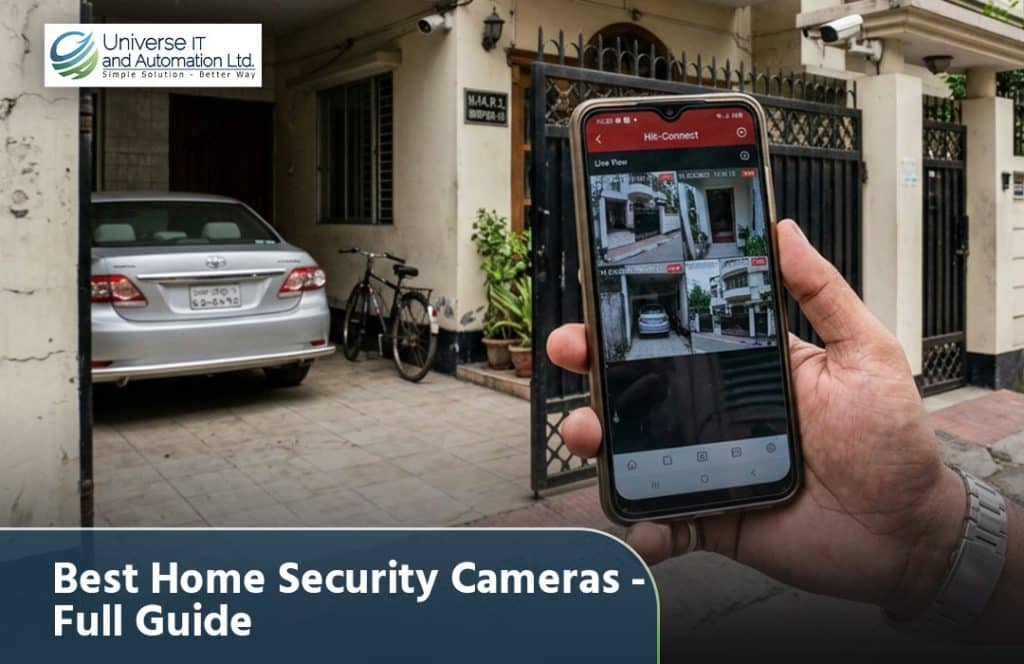
Choosing a home security camera used to mean picking between a handful of bulky, expensive systems. Today, the market is flooded with options — Wi-Fi cameras, wired DVR systems, solar-powered units, cameras with AI detection — and that abundance of choice often makes the decision harder, not easier. This guide walks through everything you actually need to know before buying: the types of cameras available, the features that genuinely matter, how to plan coverage for your specific home, and how to avoid common mistakes that leave blind spots or waste money on features you’ll never use. Why Every Home Benefits From a Security Camera Before getting into specifics, it’s worth being clear about what a home security camera actually accomplishes, because that shapes which type is right for you: Types of Home Security Cameras 1. Wi-Fi Indoor Cameras Compact, plug-and-play, and connected directly to your home Wi-Fi network, these are the easiest cameras to set up — often in under ten minutes with no drilling or wiring required. They’re ideal for monitoring living rooms, children’s rooms, or a home office, and most come with mobile app alerts for motion detection. 2. Outdoor Bullet and Dome Cameras These are built specifically to withstand weather and are typically wired into a central DVR or NVR system. Bullet cameras have a longer, directional shape suited for covering gates, driveways, and boundary walls, while dome cameras offer a wider field of view and blend more discreetly into ceilings or eaves — useful for porches and entryways. 3. Video Doorbell Cameras A video doorbell replaces (or attaches near) your existing doorbell and lets you see, hear, and speak to whoever is at your door — even if you’re not home. This is one of the most useful additions for apartment dwellers and homeowners alike, since front-door package theft and unexpected visitors are common concerns. 4. Solar-Powered and 4G Cameras For gates, boundary walls, or outbuildings far from a power source, solar-powered cameras with battery backup and either Wi-Fi or 4G connectivity solve the wiring problem entirely. These are especially useful for larger properties or homes where running an electrical line to a remote corner isn’t practical. 5. Full DVR/NVR Multi-Camera Systems For comprehensive whole-home coverage, a multi-camera package (typically 4 or 8 channels) connected to a central recorder offers the most complete protection. These systems record continuously to a hard drive, support multiple simultaneous camera views, and generally offer the best value per camera when covering an entire property. Key Features That Actually Matter With so many marketing terms thrown around, it’s easy to get distracted by features that sound impressive but don’t add much real value. Here’s what genuinely matters: Planning Camera Placement Around Your Home Buying the right cameras is only half the job — placement determines whether they actually do their job. A well-planned home camera layout typically covers: A good rule of thumb: prioritize entry points first, then add cameras for any blind spots a determined intruder could exploit — corners, low fences, or areas obscured by trees or parked vehicles. Wired vs. Wireless: Which Should You Choose? This is one of the most common questions homeowners face, and the honest answer is: it depends on your home and priorities. Wired systems (DVR/NVR-based) offer more reliable, uninterrupted recording since they’re not dependent on Wi-Fi signal strength, and they typically support more cameras on a single system. They’re better suited for whole-home coverage and are generally more resistant to signal jamming or interference — an important consideration for serious security setups. Wireless systems are faster and easier to install, require no cabling through walls, and are more flexible if you want to reposition cameras later or if you’re renting rather than owning your home. The trade-off is a dependency on stable Wi-Fi and, in some cases, battery charging or replacement for battery-powered models. Many homeowners in Bangladesh find a hybrid approach works best: a wired DVR system for permanent, high-priority coverage (front gate, main entrance) combined with a couple of flexible Wi-Fi cameras for indoor or easily repositioned monitoring. Budget Planning for a Complete Home Setup Rather than buying cameras one at a time, it’s usually more cost-effective to plan your full coverage need upfront and buy a package: Since exact prices shift based on brand, resolution, and current promotions, checking updated pricing directly from a trusted supplier before budgeting is the safest approach. Browsing Universe IT’s CCTV collection gives a clear, current picture of package pricing across popular brands like Hikvision, Dahua, CP Plus, and Samsung, so you can plan your home setup with real numbers rather than guesswork. Pairing Cameras With Smart Locks and Access Control A home security camera tells you what happened. A smart lock or access control system helps prevent it from happening in the first place. Combining CCTV coverage with a Door Lock upgrade — a digital lock with PIN code, fingerprint, or app-based access — adds a meaningful second layer of protection, especially for main entrances and gates. For homes with domestic help, family members coming and going at different times, or rental units, a smart lock also removes the hassle and risk of duplicated physical keys. Common Mistakes to Avoid Final Thoughts The best home security camera setup isn’t necessarily the most expensive one — it’s the one that’s properly matched to your home’s layout, covers your actual entry points, and includes reliable night vision, weatherproofing, and mobile access. Whether you go fully wired, fully wireless, or a hybrid of both, the goal is the same: eliminate blind spots and make sure that if something does happen, you have clear, usable footage to act on. Taking the time to plan coverage properly — rather than buying cameras piecemeal — will save money and deliver far better protection in the long run. For genuine, warranty-backed camera systems and expert guidance on planning a complete home setup, Universe IT’s CCTV and Access Control & CCTV collections are a reliable place to compare brands, packages, and
Top 10 CCTV Cameras in Bangladesh: A Complete Buyer’s Guide
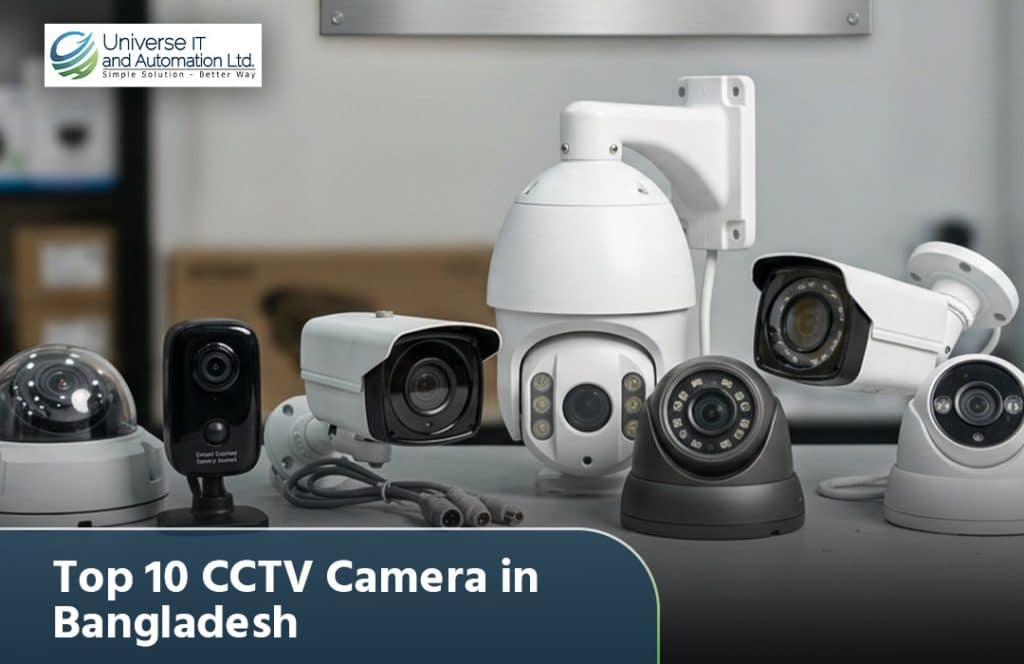
Security concerns have grown across Bangladesh’s homes, offices, and businesses over the last few years, and CCTV cameras have become one of the most practical investments anyone can make. But with dozens of brands and hundreds of models flooding the market, choosing the right one can feel overwhelming. This guide breaks down ten of the most trusted and widely used CCTV camera options available in Bangladesh today, along with what makes each one worth considering, so you can match the right camera to your specific need instead of just picking whatever’s cheapest on the shelf. What to Look For Before You Compare Models Before diving into the list, it helps to understand the handful of specifications that actually matter for everyday use in Bangladesh’s climate and power conditions: With that in mind, here are ten of the top CCTV camera options commonly recommended and sold in Bangladesh. 1. Hikvision Dome Camera Series Dome cameras get their name from the rounded, tamper-resistant housing that conceals the direction the lens is pointing, which makes them harder for intruders to avoid on purpose. Hikvision’s dome lineup typically ranges from 2MP entry-level units to 4K/8MP models used in retail chains and corporate offices. Key features worth checking before buying include WDR (Wide Dynamic Range) for handling bright windows or doorway backlighting, and IR night vision distances that usually fall between 20–30 meters for standard models. Because the housing sits flush against a ceiling, domes are less prone to physical tampering than exposed cameras, which is why they’re the default choice for stairwells, lobbies, and cash-counter areas. For Bangladeshi homes and shops, a 2MP or 4MP dome with H.265+ compression is usually enough — it keeps storage costs down while still giving clear enough footage to identify faces at close-to-medium range. 2. Hikvision Bullet Camera Series Bullet cameras are cylindrical and mounted with a visible bracket, so anyone looking at the building can immediately tell they’re being recorded — a psychological deterrent that dome cameras don’t offer as strongly. Because the housing has more internal space, bullet models generally pack in stronger IR arrays, often reaching 30–50 meters of night visibility, which matters for open areas like parking lots, gates, and boundary walls. Most outdoor bullet units carry an IP66 or IP67 rating, meaning they’re built to handle Bangladesh’s monsoon rain and humidity without water ingress. When installing, angling the camera slightly downward and away from direct sunlight prevents lens flare and keeps the auto-exposure from struggling at dawn and dusk — a common issue with poorly positioned bullet cameras in this climate. 3. Dahua IP Camera Range Dahua’s IP (network) cameras stand out for their onboard video analytics — features like line-crossing detection, intrusion zones, and vehicle/human classification that used to require expensive external software. These run using AI processing built directly into the camera chip, so alerts can be triggered in real time without needing a powerful NVR. Dahua’s Starlight and Full-Color series are particularly strong in low light, using larger image sensors to keep footage in color even at night instead of switching to grainy black-and-white IR mode. For commercial properties — warehouses, factory floors, multi-story buildings — this smart detection reduces the amount of footage staff need to manually review, since the system can flag only the events that matter (like someone crossing a restricted line) rather than recording hours of empty footage. 4. CP Plus HD Camera Series CP Plus has positioned itself as the budget-to-mid-range option across South Asia, and in Bangladesh it’s a common choice for shopkeepers and homeowners who want dependable coverage without paying for enterprise features they won’t use. Most CP Plus HD cameras use analog or HD-CVI/TVI transmission rather than full IP/network setups, which keeps installation simpler and cheaper — you don’t need a complex network configuration, just coaxial cabling to a DVR. Resolution options typically span 2MP to 5MP, and the newer AI-series models add basic motion-based human/vehicle filtering. The trade-off compared to Hikvision or Dahua is generally in low-light sensitivity and analytics sophistication, but for straightforward “record and playback if something happens” use cases, CP Plus remains one of the most cost-effective options in the market. 5. Bosch Professional Surveillance Cameras Bosch cameras are built around industrial-grade reliability rather than consumer convenience, which is why they dominate in banks, factories, and large retail chains where downtime isn’t acceptable. Bosch’s Intelligent Video Analytics (IVA) runs directly on the camera and can detect complex behaviors — loitering, object removal, crowd formation — with far fewer false alarms than typical motion detection. These cameras are also engineered for extreme temperature tolerance and vandal resistance (often IK10-rated housings), which matters for exposed installations in industrial environments. The cost is significantly higher than Hikvision or Dahua equivalents, so Bosch generally makes sense only when a business needs 24/7 uptime guarantees, advanced analytics, or is integrating into an existing enterprise security ecosystem rather than building from scratch. 6. Samsung Wisenet Series Wisenet (formerly Samsung Techwin) built its reputation on sensor and color-science quality — the same imaging expertise Samsung applies to its consumer cameras carries over into its surveillance line. This translates to more accurate skin tones and product colors on screen, which is genuinely useful in retail settings where staff need to verify things like the color of a returned item or a vehicle’s paint at an entry gate. Wisenet cameras also tend to handle high-contrast scenes well, keeping both bright and shadowed areas of a frame visible at the same time. They’re less common in Bangladesh than Hikvision or Dahua, generally imported through specialized security vendors, and priced closer to the premium end — best suited to businesses where image accuracy is a functional requirement, not just a nice-to-have. 7. ZKTeco CCTV & Access Combo Systems ZKTeco’s core strength is convergence — instead of running a camera system, a biometric attendance system, and a door access system as three separate platforms, ZKTeco lets a business manage all three from one interface. This is particularly useful for