
Best Card Print Machine in Bangladesh 2026
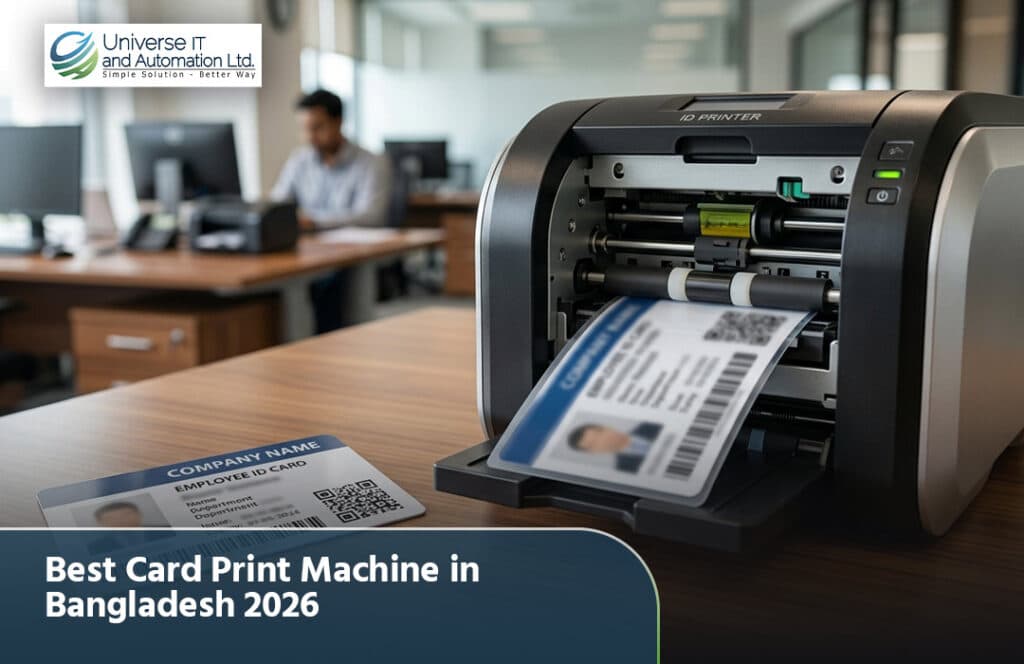
If you run a school, bank, hospital, corporate office, or event management business in Bangladesh, you already know how important a professional ID card is. It represents your brand, secures your premises, and builds trust with employees, students, and visitors. But to produce sharp, durable, and professional-looking ID cards in-house, you need the right equipment — a reliable card print machine. In this guide, we will walk you through everything you need to know about choosing the best card print machine in Bangladesh, including top brands, key features, pricing insights, and why Universe IT And Automation Ltd is the trusted supplier for businesses across the country. What Is a Card Print Machine? A card print machine, also known as an ID card printer or PVC card printer, is a specialized device designed to print high-resolution images, text, barcodes, and photos directly onto plastic PVC cards. Unlike regular inkjet or laser printers, these machines use thermal transfer or dye-sublimation technology to produce durable, smudge-proof, and long-lasting cards. Card print machines are widely used for: Why Businesses in Bangladesh Need a Card Print Machine Bangladesh’s corporate, educational, and healthcare sectors are growing rapidly, and with that growth comes a higher demand for secure identity management. Manually outsourcing card printing is often slow, costly, and inconsistent in quality. Owning your own card print machine allows you to: This is why more organizations across Dhaka, Chattogram, Sylhet, and other cities are investing in professional-grade card printers instead of relying on third-party print shops. Top Card Print Machine Brands Available in Bangladesh When choosing the best card print machine in Bangladesh, brand reliability and after-sales support matter just as much as the price. Here are the top trusted brands available through Universe IT And Automation Ltd: 1. Zebra Card Printers Zebra is a globally recognized leader in ID card printing technology, known for durability and consistent print quality. Popular Zebra models include the Zebra ZC300 Dual Side ID Card Printer and Zebra ZXP Series 7 ID Card Printer, both designed for high-volume printing environments like banks, universities, and large corporate offices. Zebra printers are ideal if you need dual-sided printing, encoding capability for RFID cards, and industrial-level reliability. 2. Evolis Card Printers Evolis is another premium brand widely used in Bangladesh for its compact design and excellent print resolution. The Evolis Primacy ID Card Printer, available with single or dual print heads, is a favorite among businesses that need professional card printing with encoding options for magnetic stripe, smart chip, or contactless RFID cards. 3. HiTi Card Printers HiTi offers a great balance between affordability and performance, making it a popular choice for small to medium-sized businesses. The HiTi CS200e Single Side and Dual Side ID Card Printers are widely used for schools, clinics, and retail membership programs that need reliable everyday printing without a high upfront investment. Key Features to Consider Before Buying a Card Print Machine Choosing the right card print machine depends on your specific business needs. Here are the most important factors to evaluate: Print Type: Single-Sided vs Dual-Sided If you only need information on one side of the card, a single-sided printer like the HiTi CS200e Single Side model is sufficient. For cards requiring information on both sides — such as employee details on the front and terms on the back — a dual-sided printer like the Zebra ZC300 or HiTi CS200e Dual Side is a better investment. Print Volume and Speed Consider how many cards you will print daily or monthly. High-volume institutions such as universities or large corporations should choose industrial-grade printers with faster throughput, while smaller offices can opt for standard desktop models. Encoding Capability If your organization uses access control, attendance systems, or cashless payment cards, you will need a printer that supports RFID, smart card, or magnetic stripe encoding. Both Zebra and Evolis offer models with built-in encoding options. Print Resolution Higher DPI (dots per inch) results in sharper images and text. Most professional card printers offer 300 DPI, which is more than enough for crisp photo ID printing. Ribbon and Consumable Availability Before purchasing, make sure ribbons, printheads, and PVC cards for your chosen printer model are readily available in Bangladesh. Universe IT stocks genuine ribbons and printheads for Zebra, Evolis, and HiTi printers, ensuring your machine never sits idle due to unavailable consumables. After-Sales Support and Warranty A card printer is a long-term investment. Choose a supplier that offers genuine products, warranty coverage, and responsive technical support — something Universe IT And Automation Ltd guarantees to every customer. Card Print Machine Price in Bangladesh Pricing for card print machines in Bangladesh varies depending on the brand, model, and features. As a general guide: For the most accurate and updated card print machine price in Bangladesh, it’s best to contact Universe IT directly, as pricing can change based on stock availability and import costs. Why Choose Universe IT And Automation Ltd? Universe IT And Automation Ltd is one of Bangladesh’s trusted suppliers of ID card printers, barcode systems, access control solutions, and enterprise IT infrastructure. Here’s why businesses across the country choose us: Genuine Products from Trusted Global BrandsWe supply 100% genuine Zebra, Evolis, and HiTi card printers, along with authentic ribbons, printheads, and PVC cards — so you never have to worry about compatibility or print quality issues. Complete Range of Card Printing SolutionsFrom single-sided desktop printers to dual-sided industrial machines, along with RFID cards, PVC cards, and printer accessories, we offer everything you need under one roof. Expert Guidance and SupportOur team helps you choose the right card print machine based on your business size, printing volume, and security requirements — not just the most expensive option. Nationwide Service and Fast ResponseWhether you’re based in Dhaka or elsewhere in Bangladesh, our team is ready to assist with installation, troubleshooting, and consumable supply. Beyond Card PrintingUniverse IT also specializes in barcode printers and scanners, access control and time attendance systems, CCTV surveillance, RFID asset tracking, and smart door locks — making us
faqs
Frequently Asked Questions Signages & Marketing Signage plays a crucial role in marketing by attracting attention, communicating messages, and enhancing brand visibility. Here’s how signages contribute to marketing efforts: Packaging Packaging refers to the process of designing and creating the container or wrapping for a product. It serves multiple purposes, including protecting the product during storage and transportation What If I Don’t Have a Business Card Design? Regardless of which option you choose, make sure that your business card design reflects your brand identity and includes essential information such as your name, job title, company name, contact information, and logo if applicable. What Size Are Business Cards The standard size for business cards is 3.5 inches by 2 inches (8.9 cm by 5.1 cm). This size is widely accepted and fits conveniently into most wallets and cardholders. However, there can be variations in size based on personal preference or regional standards.
What is Smart Home Automation System? Uses & Benefits BD
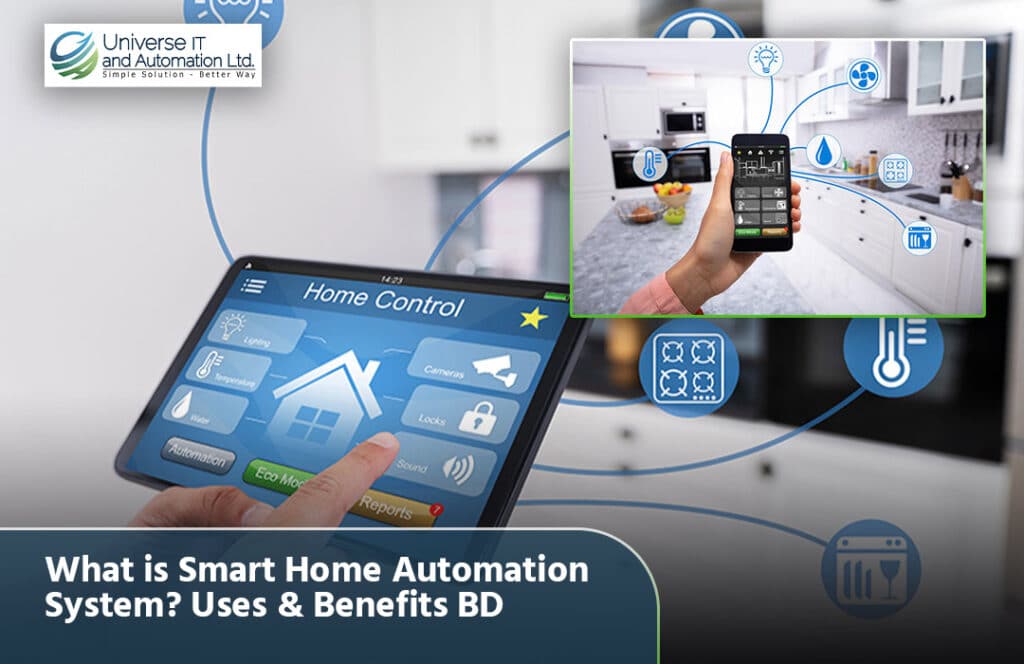
In today’s digital world, technology is making our lives easier, safer, and more efficient. One of the most popular innovations is the smart home automation system. From controlling lights with your phone to managing security remotely, smart homes are becoming increasingly common in countries like Bangladesh. As internet access and modern devices become more affordable, many homeowners and businesses are adopting smart solutions for better convenience and energy savings. What is a Smart Home Automation System? A Smart Home Automation System is a technology setup that allows you to control and manage your home’s devices automatically or remotely using a smartphone, tablet, or computer. It connects different home appliances—such as lights, fans, air conditioners, security cameras, and door locks—through the internet. This system is powered by the concept of the Internet of Things (IoT), where devices communicate with each other and can be controlled from anywhere. For example, you can: Turn off lights without getting up Control AC temperature before reaching home Monitor your home security from anywhere Automate daily routines like turning on lights at sunset In simple terms, a smart home system transforms a regular house into an intelligent, connected living space that works according to your needs and preferences. Smart Home Automation System Explained A Smart Home Automation System is a connected network of devices that work together to control and automate household functions like lighting, security, temperature, and appliances. These systems rely on the Internet of Things, where each device communicates through the internet and responds to user commands or pre-set conditions. Instead of manually operating everything, automation allows your home to think and act smartly based on your habits, schedules, or real-time data. How It Works (Step-by-Step Deep Explanation) 1. Input (User Command or Trigger) Everything starts with an input. This can be: A manual command (via mobile app or voice assistant like Google Assistant or Amazon Alexa) A scheduled time (e.g., lights turn on at 6 PM) A sensor trigger (motion, temperature, light detection) Example: You say, “Turn on the living room lights.” Communication (Internet / Wireless Protocol) The command is sent through communication technologies like: Wi-Fi Bluetooth Zigbee / Z-Wave These protocols allow devices to “talk” to each other through a central system. Control Hub / Controller The system uses a central controller (hub or app) to process commands. This can be: A smartphone app A smart hub device Cloud-based system The controller decides what action should be taken. Action (Device Response) Once the command is processed, the device performs the action: Lights turn ON/OFF AC adjusts temperature Door locks/unlocks Security cameras activate All of this happens within seconds. Basic Concept of Automation in Homes (Deep Explanation) At its core, home automation follows a simple logic: “IF this happens → THEN do that” This is called conditional automation. Example Scenarios: IF motion is detected → THEN turn on lights IF temperature rises above 30°C → THEN turn on AC IF it’s 10 PM → THEN lock all doors automatically Key Elements of Home Automation 1. Sensors (Eyes & Ears of the System) Sensors detect changes in the environment: Motion sensors Temperature sensors Smoke detectors They collect real-time data. 2. Controllers (Brain of the System) The controller (app or hub) processes data and makes decisions based on rules you set. 3. Actuators (Action Takers) These are devices that perform actions: Smart bulbs Smart switches Smart locks Why It Matters (Especially in Bangladesh 🇧🇩) Helps reduce electricity bills with smart energy use Improves security with remote monitoring Adds comfort and convenience in daily life Ideal for modern apartments, offices, and smart buildings Simple Real-Life Example Imagine you leave your home in Dhaka and forget to turn off the lights. With a smart system, you can open your phone and switch them off instantly—no matter where you are. Smart Home Automation System (Complete Understanding) A Smart Home Automation System becomes truly powerful when all systems—lighting, security, climate, entertainment, and voice—are integrated into one intelligent ecosystem. Below is a deeper, more technical and practical explanation so you can fully understand how it works in real life. System Architecture (How Everything Connects) A Smart Home Automation System is built in layers: A. Device Layer (Hardware) These are the physical components: Smart bulbs, switches, plugs Cameras, motion sensors, door locks AC controllers, thermostats These devices collect data and perform actions. Communication Layer Devices communicate using: Wi-Fi (most common in Bangladesh) Zigbee / Z-Wave (low power, stable networks) Bluetooth (short-range control) This layer ensures all devices stay connected and responsive. Control Layer (Brain) This is where decisions are made: Mobile apps Smart hubs Cloud platforms The system processes commands using logic rules and automation. Application Layer (User Interface) This is what you interact with: Smartphone apps Voice assistants like Google Assistant and Amazon Alexa This layer gives you full control anytime, anywhere. Types of Automation Logic (Beyond Basic “IF–THEN”) A Smart Home Automation System doesn’t just follow simple rules—it can use advanced logic: A. Conditional Automation IF motion detected → THEN turn on light B. Time-Based Automation Lights turn on at sunset Doors lock at 11 PM C. Multi-Condition Automation IF motion detected AND it’s night → THEN turn on lights IF temperature > 30°C AND someone is home → THEN turn on AC D. Scene-Based Automation Multiple actions triggered together: “Good Night Mode” → Lights OFF + Doors LOCK + AC ON E. AI-Based Automation (Advanced) Some systems learn your behavior over time: Automatically adjust temperature based on your routine Suggest energy-saving actions Integration Between Systems (Real Power of Automation) The real strength of a Smart Home Automation System is integration. Example: Smart Living Scenario When you arrive home: Door unlocks automatically Lights turn on AC starts cooling Your favorite music plays All systems work together seamlessly. Local vs Cloud Control (Important for Bangladesh) Local Control Works without internet Faster response More secure Cloud Control Access from anywhere Requires internet connection Enables remote monitoring Best setup: Hybrid system (Local + Cloud) for reliability. Energy Efficiency & Cost Optimization
How Does a Lanyard Printing Machine Work? Step-by-Step
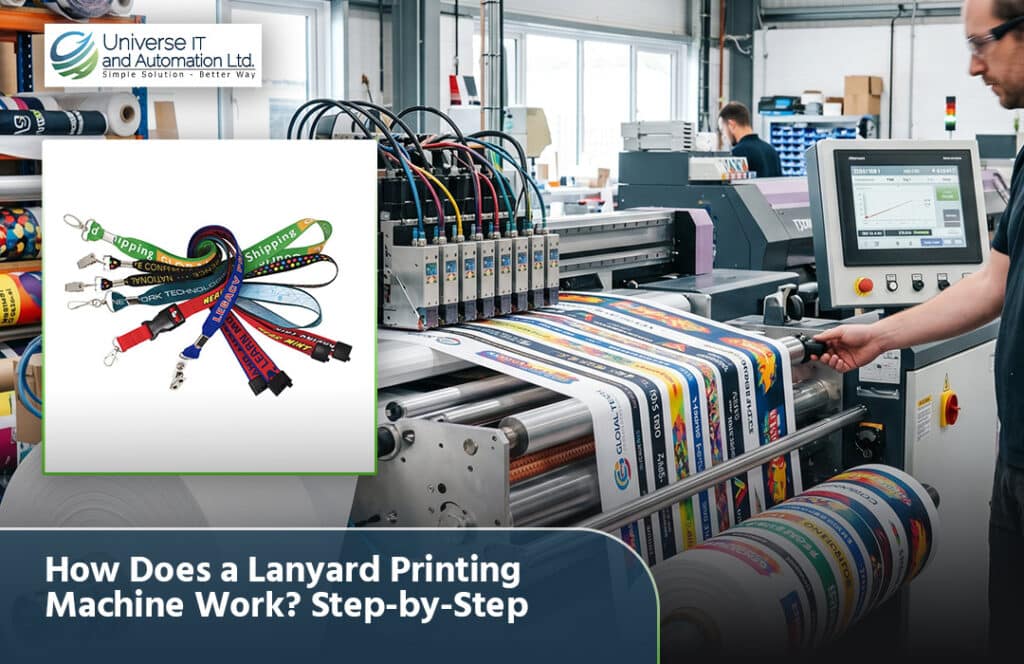
A Lanyard Printing Machine is a specialized device used to print logos, text and designs on fabric lanyards for branding, ID cards, events, and promotional use. The process starts with designing the artwork on a computer using graphic software. Once the design is ready, it is transferred to the printing system of the Lanyard Printing Machine. Next, the lanyard material is carefully loaded into the machine, usually polyester or nylon fabric. The machine then uses heat transfer, sublimation, or screen printing technology to apply the design onto the fabric with high precision. During printing, heat and pressure ensure the ink bonds permanently with the lanyard surface. After printing, the lanyards are cooled and inspected for quality control to ensure clear and accurate output. Finally, they are cut, attached with hooks or clips, and packed for delivery. The Lanyard Printing Machine ensures fast production, consistent quality, and professional-looking custom lanyards for various industries. What is Lanyard Printing? Lanyard printing is the process of adding custom designs, logos, text, or brand messages on fabric straps called lanyards. It is done using modern printing methods like sublimation, heat transfer, or screen printing. The main goal of lanyard customization is to turn a simple strap into a useful and branded product that represents a company, organization, or event. With a Lanyard Printing Machine, businesses can easily produce high-quality printed lanyards with clear and long-lasting designs. These lanyards are not only useful but also help in brand promotion and identity management. Where Are Lanyards Used? Lanyards are widely used in many places. In offices, they are used for employee ID cards and security access. At events, conferences, and trade shows, lanyards help identify participants and staff. Schools and universities use them for student ID cards, while hospitals use them for staff identification. They are also popular in corporate branding and promotional campaigns because they are affordable and highly visible marketing tools. Overall, lanyards are simple but powerful accessories used for both safety and branding purposes. Types of Lanyard Printing Machines (Detailed Guide) Choosing the right Lanyard Printing Machine is very important for getting the best print quality, production speed, and cost efficiency. Different machines use different technologies, and each one is suitable for specific business needs. Sublimation Printing Machine A sublimation Lanyard Printing Machine is widely used in modern lanyard production. It works by converting solid dye into gas using heat, which then permanently bonds with polyester fabric. This process creates high-resolution, full-color, and photo-quality prints that do not fade easily. It is perfect for complex designs, gradients, and branding artwork. Best for: Corporate branding lanyards Event and conference lanyards Full-color custom designs Advantages: Very sharp and vibrant printing Long-lasting and washable Fast production for bulk orders Screen Printing Machine Screen printing is a traditional but still very popular method. In this Lanyard Printing Machine, ink is pushed through a mesh screen onto the fabric in layers. Each color requires a separate screen, which makes it ideal for simple and bold designs. Best for: Single or 2-color logo printing Large quantity orders Budget-friendly production Advantages: Low production cost for bulk orders Durable and strong ink finish Simple setup for basic designs Limitations: Not suitable for complex or multi-color designs Heat Transfer Printing Machine A heat transfer Lanyard Printing Machine works by first printing the design on special transfer paper, then applying it to the lanyard using heat and pressure. This method provides a balance between quality and cost. Best for: Medium-level custom designs Small to medium business orders Promotional lanyards Advantages: Good color accuracy Flexible design options Affordable setup cost Limitations: Slightly less durable than sublimation Digital Printing Machine A digital Lanyard Printing Machine is the most advanced option. It prints designs directly onto fabric using inkjet or digital textile technology without needing plates or screens. It is highly flexible and supports high-detail, multi-color, and personalized designs. Best for: Premium branding projects Small batch customized orders Complex and artistic designs Advantages: No setup cost for plates or screens Very high design flexibility Perfect for personalized printing Limitations: Higher cost per unit compared to bulk methods Polyester Fabric – Most Common Material for Lanyard Printing Machine Each Lanyard Printing Machine has its own strengths. Sublimation is best for vibrant designs, screen printing is best for bulk simple orders, heat transfer offers balance, and digital printing is best for premium customization. Choosing the right machine depends on your business goal, order size, and budget. The quality of a Lanyard Printing Machine output depends not only on the machine but also on the materials used. Choosing the right fabric and consumables helps ensure strong, durable, and professional-looking lanyards. Below are the main materials used in lanyard printing: Polyester Fabric: Polyester is the most commonly used material in lanyard production. It works perfectly with a Lanyard Printing Machine because it supports sharp and vibrant printing results. Features: Smooth surface for clear printing Strong and durable for long-term use Cost-effective for bulk production Ideal for sublimation printing Polyester lanyards are widely used in corporate branding, events, and promotional campaigns due to their affordability and print quality. Nylon Lanyard: Nylon is a premium material used for high-quality lanyards. It gives a glossy finish and strong texture, making it suitable for advanced printing techniques using a Lanyard Printing Machine. Features: Shiny and premium look High strength and durability Slightly more expensive than polyester Best for professional and corporate branding Nylon lanyards are often chosen for premium business identity and executive-level use. Ink and Ribbons: Ink and ribbons are essential consumables in any Lanyard Printing Machine setup. They directly affect the color quality and print durability. Features: High-quality ink ensures sharp and long-lasting prints Heat transfer ribbons improve design accuracy Available in different color types for customization Important for sublimation and thermal printing processes Good quality ink and ribbons help maintain consistency in production and reduce printing errors. The demand for Lanyard Printing Machine price in Bangladesh is increasing as more businesses invest in branding and promotional products. Choosing the right materials
Your Business Card is Your First Impression – Make It Powerful
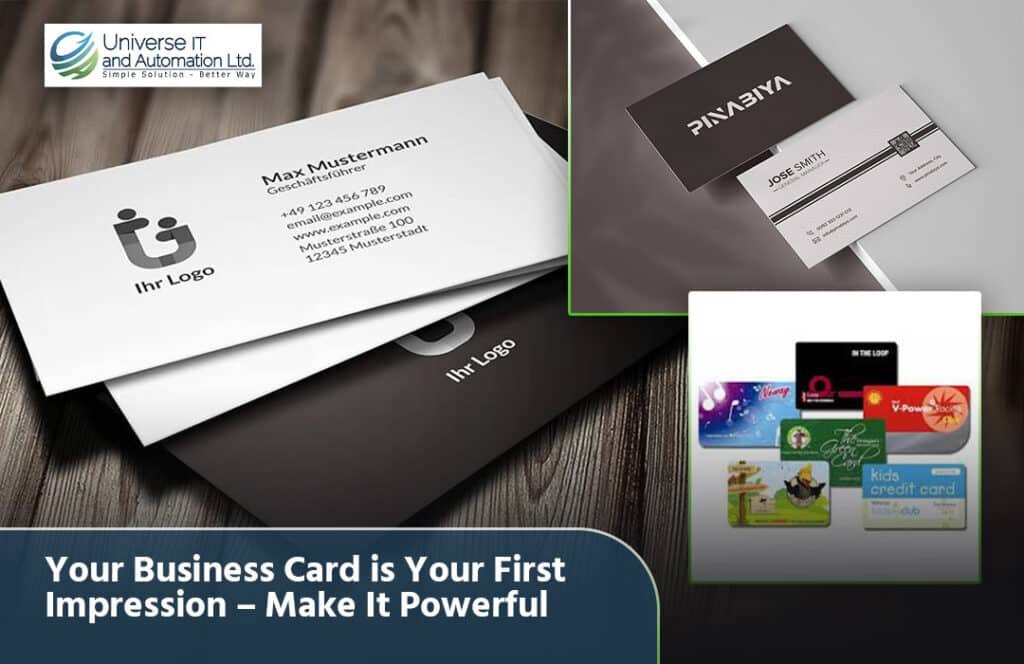
When you meet someone for the first time, you don’t get a second chance to make a first impression. In that crucial moment, a small card carries your entire professional identity. A Business Card is not just a piece of paper — it is the physical representation of your brand, your professionalism, and your credibility. In today’s competitive market, where trust and recognition are everything, a well-designed business card can instantly position you as reliable and professional. The texture, design, color, and information all work together to communicate your brand story in seconds. Why a Business Card Still Matters in the Digital Era Many people assume that digital platforms have replaced business cards — but the reality is the opposite. The importance of a Business Card has actually increased. A physical card creates a personal connection that digital sharing simply cannot replicate. When you hand someone your card, it creates a moment — a memory. That physical interaction builds trust and makes your introduction more impactful. Unlike a phone number lost in contacts or a forgotten LinkedIn request, a business card stays visible — in wallets, desks, or files — constantly reminding people of your brand. A professionally designed Business Card helps you: Build instant credibility Create a lasting impression Present your information clearly Strengthen brand recognition Stand out in networking events and meetings Key Elements of a Powerful Business Card A high-quality Business Card is not about adding more information — it’s about presenting the right information in the right way. Essential Elements: Full Name & Designation: Clearly define who you are Company Name & Logo: Strengthen brand identity Contact Information: Phone, email, website Address (if necessary): Especially for local businesses Social Media / QR Code: Adds a modern and interactive touch Design Essentials: Consistent brand colors and typography Clean and readable layout Proper spacing (avoid clutter) High-resolution logo and graphics Back Side Usage: The back of your card is valuable space. You can use it for: Tagline or slogan List of services QR code for website/portfolio Promotional message Types and Materials of Business Cards The material and finish of your Business Card directly affect how people perceive your brand. Choosing the right type can elevate your image instantly. Popular Options in Bangladesh: Standard Matte / Glossy Cards Affordable and widely used. Suitable for startups and general business use. Spot UV Cards Glossy highlights on specific areas like logos or names. Creates a premium and eye-catching effect. Embossed / Debossed Cards Raised or pressed design gives a luxury feel and strong tactile experience. Soft Touch Cards Smooth, velvet-like finish. Feels premium and modern. Metal / Transparent Cards Highly unique and memorable. Best for high-end brands and executives. Recycled Paper Cards Eco-friendly option, ideal for sustainable and conscious brands. Business Card Printer Price in Bangladesh The Business Card printer price in Bangladesh varies depending on several important factors: Paper quality (GSM) Finishing type (Matte, Glossy, UV, etc.) Quantity (bulk reduces cost per piece) Design complexity Special features (embossing, foil, die-cut) Average Price Range in BD: Standard 300 GSM (100 pcs): ৳300 – ৳600 Spot UV / Soft Touch (100 pcs): ৳700 – ৳1500 Embossed / Foil Cards (100 pcs): ৳1500 – ৳3000 Metal / Transparent (50 pcs): ৳2000+ Prices may vary between printing providers, so comparing multiple quotes is always recommended to get the best deal. Where to Print Your Business Cards You can find many printing services in Dhaka and Chittagong, but choosing the right provider is crucial. Quality, finishing, and delivery time all matter. Online printing services are becoming increasingly popular because they offer: Convenience (order from anywhere) Competitive pricing Home delivery Design support A reliable printing company ensures your Business Card reflects your brand perfectly — from design to final print. How to Choose the Right Business Card for Your Business Choosing the right Business Card is a strategic decision, not just a design choice. Consider These Factors: Your Industry Corporate → Minimal & clean Creative → Unique & bold Retail → Colorful & engaging Your Budget Balance between affordability and quality. Cheap cards can harm your brand image. Your Target Audience Design your card based on who you are trying to impress. Material & Finish Premium finishes create stronger impressions but cost more. Brand Consistency Your card must match your website, logo, and overall branding. Final Thoughts A Business Card is one of the most powerful yet underrated marketing tools. It is a small investment that delivers long-term branding value. Choosing the right design, material and Business Card printer price in Bangladesh will significantly impact how people perceive your business. A well-crafted Business Card doesn’t just share your contact details — it tells your story, builds trust, and opens doors to new opportunities. Ready to create a Business Card that truly represents your brand? Get premium quality design, modern finishing, and the best Business Card printer price in Bangladesh — all in one place. Order now and make every first impression unforgettable.
What is an Office Security System? Complete Business Guide
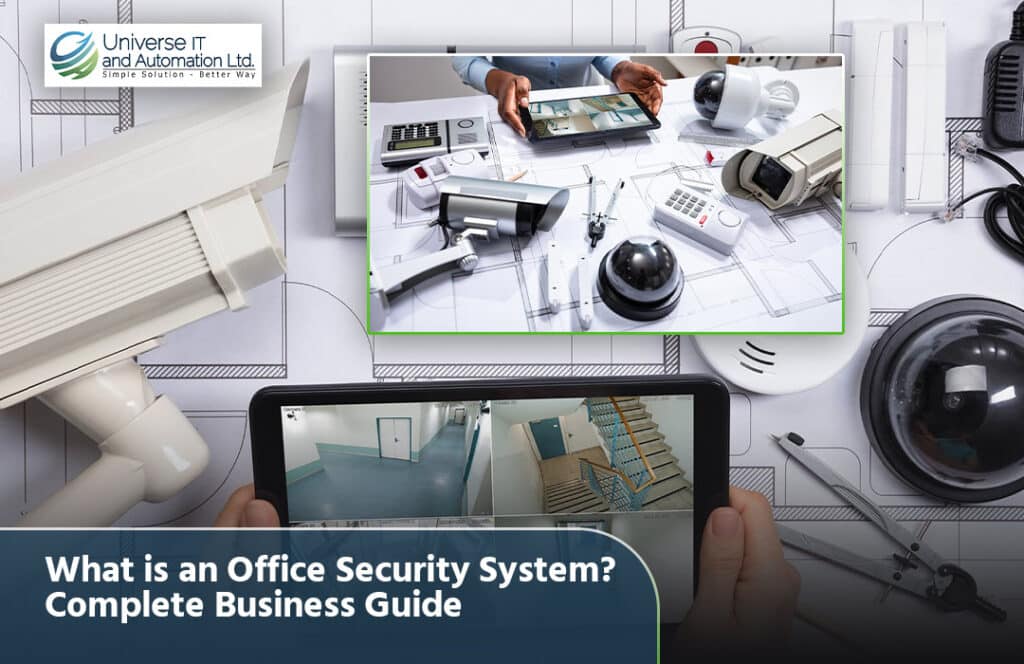
In the modern business era, workplace safety has become a critical factor for success, productivity, and brand reputation. Every organization—whether a small office or large corporate house—needs a strong protection strategy to secure employees, data, and valuable assets. A well-planned Office Security System is no longer a luxury; it is a necessary investment for every growing business. With increasing security risks such as theft, unauthorized access, and cyber-physical threats, companies are adopting smart and automated security solutions to ensure full control over their environment. What is an Office Security System? An Office Security System is a complete and integrated safety solution designed to monitor, control, and protect office spaces using advanced technologies. It typically includes CCTV surveillance cameras, biometric or card-based access control, intrusion alarm systems, motion sensors, fire detection systems, and cloud-based monitoring platforms. This system works as a centralized security network that continuously monitors activities inside and outside the office. With real-time video recording, automated alerts, and remote access features, an Office Security System allows business owners and managers to keep their workplace under constant watch from anywhere in the world. Modern systems even use AI-based analytics to detect unusual behavior and improve response time. Why office security is important in modern businesses A modern Office Security System in Bangladesh comes with several essential features that ensure complete workplace safety. It includes CCTV surveillance for 24/7 monitoring, biometric access control to restrict unauthorized entry, motion sensors for detecting unusual activity, and alarm systems for instant alerts during emergencies. Cloud-based remote access allows business owners to monitor their office from anywhere using mobile or laptop devices. Additionally, AI-powered analytics help identify suspicious behavior quickly. These features together create a strong Security System modern office setup that improves safety, reduces risks, and ensures smooth business operations. Important Key Benefits Enhanced Workplace Safety: A strong Office Security System in Bangladesh ensures maximum safety for employees and office property. CCTV cameras and access control systems help prevent unauthorized entry and reduce theft risks. This creates a secure working environment where employees feel protected, increasing confidence, productivity, and overall workplace discipline. Remote Monitoring & Control: A modern Security System modern office allows business owners to monitor their office from anywhere in real time. Using mobile apps or cloud platforms, they can view live CCTV footage, receive alerts, and control access systems remotely. This ensures constant supervision and quick response to any security issue. Prevention of Financial Loss: An advanced Office Security System in Bangladesh helps reduce financial losses caused by theft, fraud, or security breaches. By monitoring every activity and restricting unauthorized access, businesses can protect valuable assets and sensitive data. This leads to better financial stability and long-term business protection. Improved Employee Accountability: A Security System modern office improves employee discipline by monitoring workplace activities. When employees know that a security system is active, they follow rules more strictly and maintain professionalism. This increases accountability, reduces internal misconduct, and builds a more organized and productive work environment. What is an Office Security System? An Office Security System is a smart protection setup designed to secure office spaces, employees, and valuable business assets from theft, unauthorized access, and security threats. It combines different security technologies to ensure a safe and controlled working environment. Basic Concept of Security System in Offices The basic concept of an Office Security System is to create a secure environment where only authorized people can access specific areas while all movements are monitored in real time. It usually includes CCTV cameras, biometric or card-based access, alarm systems, and remote monitoring tools. A complete office security system solution ensures continuous protection by integrating all these devices into one system. With proper Office security system installation, businesses can monitor activities 24/7, prevent internal theft, and respond quickly to emergencies. This makes offices safer, smarter, and more efficient in today’s modern business environment. Types of Office Security Systems A complete Office Security System is made up of multiple integrated technologies that work together to ensure full protection of employees, assets, and sensitive information. Each system has a unique role, and when combined, they create a strong office security system solution for modern workplaces. CCTV Surveillance System A CCTV surveillance system is the backbone of any modern Office Security System. It uses high-definition cameras placed at key locations such as entrances, corridors, reception areas, and restricted zones to monitor every activity in real time. Advanced CCTV systems now include night vision, motion detection, AI-based facial recognition, and cloud storage. Business owners can access live or recorded footage from anywhere using mobile apps or computers. This helps in preventing theft, monitoring employee behavior, resolving disputes, and maintaining transparency within the workplace. A proper Office security system installation ensures correct camera placement for maximum coverage and effectiveness. Access Control System An access control system is designed to manage and restrict entry into specific areas of an office. It ensures that only authorized personnel can access sensitive departments like server rooms, finance sections, or management offices. Modern systems use RFID cards, PIN codes, fingerprint scanners, or facial recognition technology. This not only improves security but also creates a detailed log of who entered and exited the building and at what time. In a well-planned Office Security System, access control plays a key role in preventing unauthorized movement and internal security breaches. Alarm System An alarm system is an essential alert mechanism in any Office Security System solution. It is designed to detect unauthorized entry, break-ins, or suspicious movements and immediately trigger loud sirens and notifications. Advanced alarm systems are connected to mobile devices, security teams, or monitoring centers, ensuring instant response. They may include door sensors, window sensors, and motion detectors. This fast response system helps reduce damage, prevent theft, and protect office assets before any serious loss occurs. Fire Detection System A fire detection system is a life-saving component of a modern Office Security System installation. It detects early signs of fire such as smoke, heat, or gas leakage and immediately activates alarms and
ID Card Printing (High Resolution)
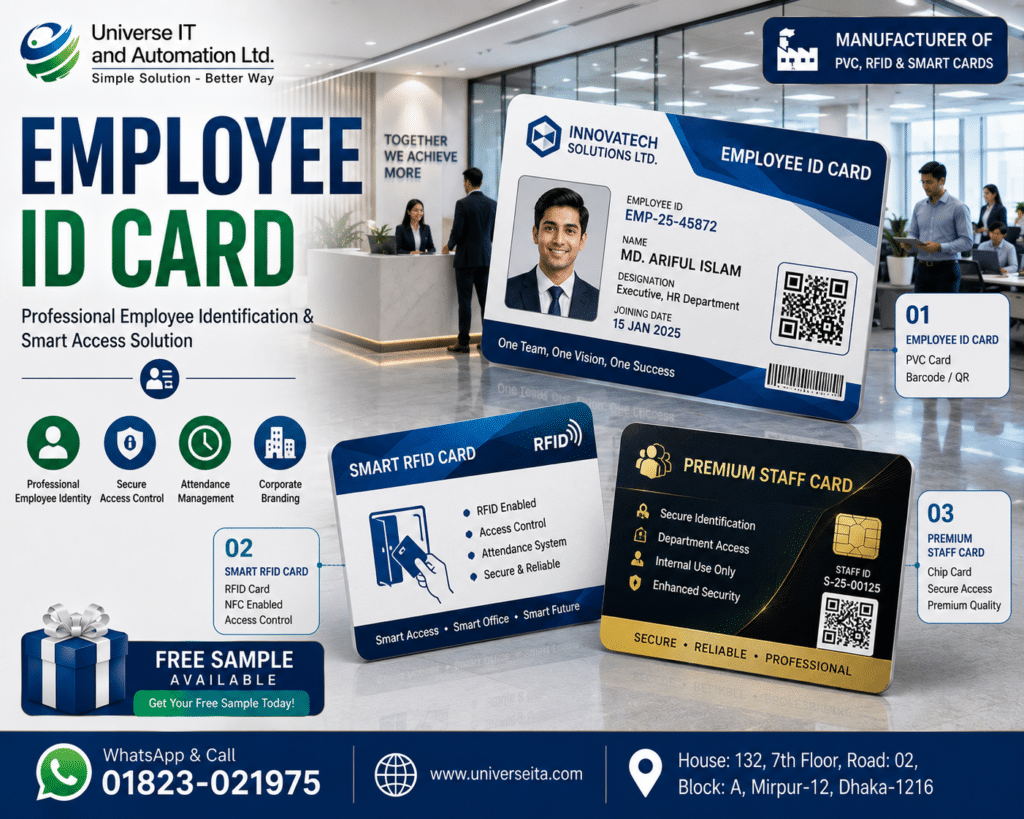
Normal PVC Card with Printing: High Resolation Card Printing Print Type: Any Color (as per design) Card Type: PVC White Card Print Resolation: 2400×3600 DPI Thickness: 0.7-0.9mm Card Size: 86mm* 54mm, (ISO CR80) Surface: Glossy / Mat
Visitor Card Printing (High Resolution)
- High Resolation Card Printing
- Print Type: Any Color (as per design)
- Card Type: PVC White Card
- Print Resolation: 2400×3600 DPI
- Thickness: 0.7-0.Card Size: 86mm* 54mm, (ISO CR80)
- Surface: Glossy / Mat
Pre-Printing Patient Card Printing (High Resolution)
- High Resolation Card Printing
- Print Type: Any Color (as per design)
- Card Type: PVC White Card
- Print Resolation: 2400×3600 DPI
- Thickness: 0.7-0.Card Size: 86mm* 54mm, (ISO CR80)
- Surface: Glossy / Mat
Pre-Printing Card Printing (High Resolution)
- High Resolation Card Printing
- Print Type: Any Color (as per design)
- Card Type: PVC White Card
- Print Resolation: 2400×3600 DPI
- Thickness: 0.7-0.Card Size: 86mm* 54mm, (ISO CR80)
- Surface: Glossy / Mat